
Arnaldo Rizzo, MD – Morphodynamic Cosmetic Surgery Abstract Recent discoveries in mechanobiology, particularly the work of Li et al. (2025), have revealed that direct cell-to-cell contact can induce fibroblast-to-myofibroblast transition independently of traditional biochemical or extracellular mechanical cues. This finding redefines fibrosis as a mechanical and communicative dysfunction, rather than merely an inflammatory or biochemical event. Understanding this mechanism provides… Leggi di più... "Mechanobiological Strategies for Fibrosis Control: From Cellular Contact to Functional Morphodynamic"
Mechanobiomaterials: Integrating Mechanics and Biology for Tissue Regeneration
Definition and Concept The term “mechanobiomaterials” was proposed to describe biomaterials designed to engage with living tissues through mechanical interactions rather than passive biochemical compatibility (Lin et al., 2024, Sui et al., 2024), a new class of biomaterials designed to actively engage mechanobiological principles to enhance tissue regeneration. The authors discussed how materials can be engineered to deliver mechanical cues—such… Leggi di più... "Mechanobiomaterials: Integrating Mechanics and Biology for Tissue Regeneration"
Bone atrophy caused by facial onlay implants.
The aim of this article is to explore the medium- to long-term consequences of onlay-type facial prosthesis applications. The rationale is that inserting a prosthesis, made of any material, eliminates the physiological mechanical stimulation of muscles and neuromuscular dynamics, leading to negative remodeling of the bones on which the prosthesis is placed. Leggi di più... "Bone atrophy caused by facial onlay implants."

The role of Mechanobiology in Regenerative Aesthetic Medicine and Morphodynamic Cosmetic Surgery (MDCS).
Abstract: Different mechanical forces play an important role in all stages of human life, from the embryonic period (morphogenesis) to aging, through the development, maturation and maintenance of organs and tissues. Mechanical stimuli also play a key role in regenerative medicine, as it has been demonstrated that stem cells undergo differentiation under mechanical stimulation. Mechanobiology is the study of how… Leggi di più... "The role of Mechanobiology in Regenerative Aesthetic Medicine and Morphodynamic Cosmetic Surgery (MDCS)."

Mechanobiology
Mechanobiology is the study of how mechanical forces influence biological processes—from molecules to entire tissues. It is an interdisciplinary field, sitting at the crossroads of biology, medicine, physics, biomaterials science, and bioengineering. Mechanical stimuli regulate fundamental processes throughout human life: from embryonic morphogenesis, to growth and maturation, to tissue maintenance and aging. In recent years, mechanobiology has become a key… Leggi di più... "Mechanobiology"
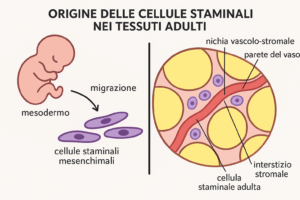
Stem Cells: The Foundation of Regenerative Medicine.
Stem cells have the unique ability to differentiate and specialize into virtually all types of human cells—around 200 in total—including nerves, skin, muscle, liver, heart, and bone. They are generally classified by origin: Among these, adult stem cells represent a particularly valuable resource thanks to their accessibility and clinical potential. Adult stem cells are pluripotent and can regenerate or replace… Leggi di più... "Stem Cells: The Foundation of Regenerative Medicine."