
Arnaldo Rizzo, MD – Morphodynamic Cosmetic Surgery Abstract Recent discoveries in mechanobiology, particularly the work of Li et al. (2025), have revealed that direct cell-to-cell contact can induce fibroblast-to-myofibroblast transition independently of traditional biochemical or extracellular mechanical cues. This finding redefines fibrosis as a mechanical and communicative dysfunction, rather than merely an inflammatory or biochemical event. Understanding this mechanism provides… Leggi di più... "Mechanobiological Strategies for Fibrosis Control: From Cellular Contact to Functional Morphodynamic"

New paradigms in MYOMODULATION of facial Dynamics.
The fundamental principle of Morphodynamic Cosmetic Surgery is that “function determines form,” according to the 1997 “Moss Functional Matrix” theory (Rizzo 2020). In recent years, the emerging discipline of Mechanobiology has explored the mechanisms of action of extrinsic mechanical stimuli, explaining in detail how cells, tissues, and organs translate mechanical stimuli into biological processes (https://www.chirurgiacosmeticamorfodinamica.it/2025/10/21/the-role-of-mechanobiology-in-regenerative-aesthetic-medicine-and-morphodynamica-cosmetic-surgery-mdcs/) Leggi di più... "New paradigms in MYOMODULATION of facial Dynamics."
Bone atrophy caused by facial onlay implants.
The aim of this article is to explore the medium- to long-term consequences of onlay-type facial prosthesis applications. The rationale is that inserting a prosthesis, made of any material, eliminates the physiological mechanical stimulation of muscles and neuromuscular dynamics, leading to negative remodeling of the bones on which the prosthesis is placed. Leggi di più... "Bone atrophy caused by facial onlay implants."
Effects of linear scars on the face
Facial inear scars, according to one Morphodynamic perspective, can be considered “Distant Modulators of Facial Dynamics”. Linear scars are not only localized cutaneous alterations, but persistent biomechanical factors capable of influencing tissues beyond their anatomical borders (Tomasek et al. 2002; Gurtner et al. 2008). The anisotropic deposition of collagen generates mechanical discontinuities that alter local tension fields, with consequences that… Leggi di più... "Effects of linear scars on the face"

Xerostomia e sindrome dell’occhio secco (approfondimento).
Introduzione La secchezza orale (xerostomia) e la secchezza oculare (dry eye) derivano tipicamente da un’insufficiente funzione delle ghiandole salivari e lacrimali. Cause comuni includono la Sindrome di Sjögren (SS), una malattia autoimmune con infiltrazione linfocitaria nelle ghiandole esocrine, e i danni post-radioterapia (ad esempio in pazienti trattati per tumori testa-collo). Queste condizioni provocano un forte impatto sulla qualità di vita:… Leggi di più... "Xerostomia e sindrome dell’occhio secco (approfondimento)."

Technique of Morphodynamic Cosmetic Surgery.
Introduction More and more often, minimally invasive surgery is preferred to more aggressive procedures. Various parts of the face and body can be reshaped with Morphodynamic Cosmetic Surgery methods, avoiding the need for invasive operations in later years. Facial Profiloplasty and Harmonization All parts of the face are interconnected: modifying one area produces effects on the others. Morphodynamic Cosmetic Surgery… Leggi di più... "Technique of Morphodynamic Cosmetic Surgery."

Scientific Foundations of Morphodynamic Cosmetic Surgery.
Morphodynamic Cosmetic Surgery (MCS) is rooted in solid scientific principles that integrate biology, physics, medicine, and bioengineering.Its central concept is ,simple, dated but too often overlooked and therefore revolutionary: “Form arises from function”.This means that facial tissues—bone, muscle, fat, and skin—are not independent structures, but interconnected elements that continuously adapt to mechanical forces and functional dynamics acting upon them.Key scientific… Leggi di più... "Scientific Foundations of Morphodynamic Cosmetic Surgery."

The role of Mechanobiology in Regenerative Aesthetic Medicine and Morphodynamic Cosmetic Surgery (MDCS).
Abstract: Different mechanical forces play an important role in all stages of human life, from the embryonic period (morphogenesis) to aging, through the development, maturation and maintenance of organs and tissues. Mechanical stimuli also play a key role in regenerative medicine, as it has been demonstrated that stem cells undergo differentiation under mechanical stimulation. Mechanobiology is the study of how… Leggi di più... "The role of Mechanobiology in Regenerative Aesthetic Medicine and Morphodynamic Cosmetic Surgery (MDCS)."

Indications of Morphodynamic Cosmetic Surgery.
Morphodynamic Cosmetic Surgery (MCS) is indicated whenever there is a need to restore balance and harmony to the face by correcting negative dynamics rather than simply altering form. Unlike traditional cosmetic surgery, which often targets a single defect (wrinkle, sagging, excess skin), MCS looks at the face as a functional unit, where bone, muscle, fat, and skin interact continuously. Main… Leggi di più... "Indications of Morphodynamic Cosmetic Surgery."
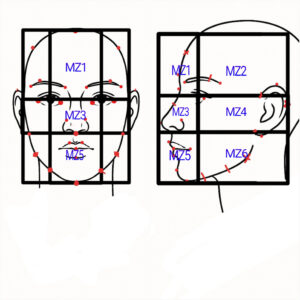
Morphodynamic Craniofacial Analysis
Traditional cephalometric and craniometric methods are widely used in many fields, but they mainly focus on bone landmarks. In aesthetic practice, however, what truly matters are the soft tissues and their dynamic behavior, because these are what define facial beauty and harmony. Morphodynamic Analysis provides us with a practical and objective tool to: The method begins with standardized photographs —… Leggi di più... "Morphodynamic Craniofacial Analysis"